Meditation for young people might consist of activities as straightforward as focusing on a single item or pausing their breathing. If you want to start practicing yoga meditation, the ideal approach for novices to get started is to do these postures with their children. When they are of an age when they are able to comprehend the advantages of yoga meditation, you can start gradually increasing the difficulty of the poses.
Breathing from the stomach
In the practice of yoga and meditation, there are a variety of various breathing methods that are utilized. The following are five practices that are simple to incorporate into your day-to-day routine: The practice of abdominal breathing yields the best results when carried out on an empty stomach. It entails taking a vigorous breath in through the nose and then a forceful breath out through the mouth. Whenever you practice abdominal breathing, you should press the palm of your right hand against your stomach. When you inhale, be sure to fully exhale, and when you exhale, make sure to do it with force.
The first thing you need to do in order to get the most out of this workout is to perfect your breathing technique. To begin, position your hands such that they are either in the centre of your chest or on your upper abdomen. When you breathe correctly, you will notice that your ribcage will constrict, while your stomach will expand. As you breathe in, give it your best effort to raise your hand as high as you can. If you practice maintaining a good breathing pattern even while you’re under pressure, you could discover that it’s simpler to do so when the pressure is really on.
In the tree posture
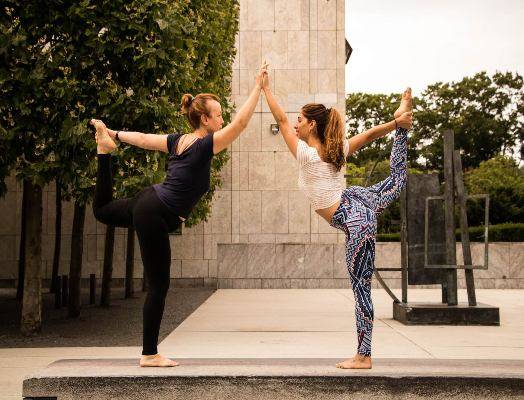
The “Tree” pose is considered the most accessible and beginner-friendly yoga meditation posture. In order to perfect this pose, you will need to extend your arms and breathe deeply into it. The next step is to visualize your physical self as a tree, complete with a sturdy trunk, extensive root system, and abundant foliage at the top. Make sure that your body is aligned correctly while you practice this pose so that you can get the most benefit out of it. A simplified form is the best place to begin for beginners. Here are a few pointers to help you perfect your technique for the Tree position.
Maintaining stability for the entirety of the Tree position is of the utmost importance. If you find that you are unable to maintain this pose for more than a few minutes at a time, you should begin with a modified version of the pose. People who suffer from headaches or high blood pressure should not engage in this activity. Before beginning your yoga practice, you should discuss it with your primary care physician if you have any health concerns. When you’ve mastered how to maintain the stance, you can progress to the mountain pose. Put your arms down by your sides as you begin. The next step is to pull your front knee forward in order to properly align your hips. After that, tightening your abdominal muscles will help you get rid of the arch in your lower back.
Downward-facing dog
When you are in the downward-facing dog position, make sure that your hands and feet are in close proximity to one another, and that your shoulders are stacked directly over your wrists. Your palms should be pressed into the mat, and you should allow your elbows to dangle down while lifting your heel towards the floor. After then, carefully extend your legs out in front of you. In order to complete this move, you will need to reach your right leg high and press into the right heel. Put your left arm under your leg and put your hand on your low back while you rest your left hand there. The restorative pose known as downward-facing dog can be maintained for as long as five minutes at a time.
Patience and an openness to new experiences are two qualities essential to successful yoga meditation practice. Those who are just starting out should make it a point to pay attention to what their bodies are telling them and to be gentle to themselves. When we are under a lot of pressure, it may often be challenging to meditate. Through regular yoga practice, we can learn how to deal with the various sources of stress in our lives, so increasing our resiliency and strengthening our ability to concentrate on the here and now.
Ujjayi pranayama
A modification of the ujjayi pranayama is considered to be one of the more difficult poses in the yoga practice. In order to perform this exercise correctly, you will need to first open your throat and then breathe through it in the most even and slow manner possible. To begin, you should perform Ujjayi breathing while seated in a comfortable position, such as the cat-cow. As you become more comfortable in one pose, you are free to go on to others.
When you practice Ujjayi, you draw your vocal folds closer together in your throat, which causes the sound that you make to be similar to a whisper. At the base of the nose is a section of the throat known as the glottis. It is responsible for regulating the sound of wind and is located in the throat. The trachea, on the other hand, is a lengthy tube that runs from the mouth to the back of the throat.
Nadi Shodhanam
The technique of Nadi Shodhanam, also known as breathing through the alternative nostril, is considered to be one of the most fundamental techniques to get started with a yoga meditation practice. Although it may be challenging to carry out, this practice is beneficial since it gives you something to focus on while you are meditating. Shodhana is Sanskrit for “purification,” while the word “nadi” refers to an energy line. The goal of the Nadi Shodhana practice is to move stale energy out of the body and bring calmness to the mind. Sitting in a position that is comfortable and bringing to mind a symbol of infinity is the most effective approach to put this breathing technique into practice.
The practitioner is required to concentrate on their breathing for at least three minutes, doing so from both nostrils while taking in and releasing air. After then, they should blow their nose through the other nostril while closing one of their nostrils. Take an equal number of breaths in and out, and do your best to maintain a consistent breathing count. This technique is one of the most calming techniques of yoga meditation, and it allows the mind to rest down while also calming the nervous system.