
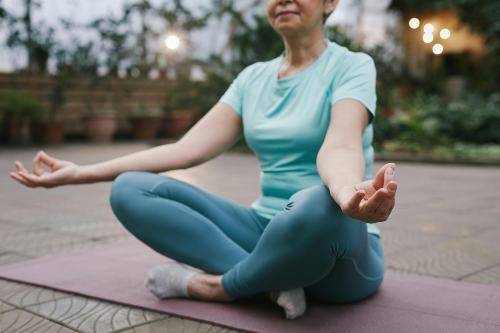
It’s time to embrace the power of deep breathing! Unfortunately, we are continuously confronted with many sources of stress every day. Whether it’s the unrelenting needs of our tasks or the relentless duties we have at home, life can be tough.
Nevertheless, stress factors are not restricted to small problems that collect slowly. They can likewise manifest as a single substantial life event that emerges all of a sudden and totally interrupts your life.
No matter how stress enters your life, the obstacles of handling it stay consistent. Thankfully, a strategy that has actually been shown to efficiently manage stress is deep breathing. Apart from decreasing stress levels, this calming strategy uses numerous benefits such as a boost in blood flow and enhanced sleep quality.
Continue reading to find out how taking deep breaths can improve your general health, enhance your strength, and decrease sensations of stress and anxiety.
What does deep breathing involve?
Practicing deep breathing enables you to use an extensive sense of peacefulness and serenity, promoting a state of inner peace. Unlike shallow chest breathing, deep breathing engages your abdominal area, offering a more detailed and efficient method to relax your body and mind.
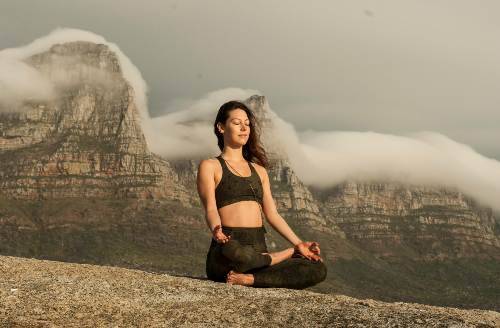
Deep breathing from the abdominal region helps in managing the nerve system by lessening the secretion of stress hormonal agents. As a result, it promotes relaxation and harmony, eventually resulting in a decrease in stress and anxiety levels.
As a result, this enhances your total health. Participating in deep stomach breathing likewise helps in the avoidance of various illness and disorders, such as high blood pressure (Breathing Exercises to Lower Your Blood Pressure, 2023), weight problems, and Type-2 diabetes (Hany Ezzat Obaya et al., 2023).
In addition, taking part in deep breaths allows you to improve your concentration on the job at hand. Instead of impulsively choosing, you can designate adequate time to consider and assess matters.
What’s the Mechanism Behind Deep Breathing’s Effectiveness?
Practicing deep breathing strategies can substantially increase oxygenation of the blood, which in turn, can enhance the performance of your cardiovascular system, basically permitting it to work at a sped up rate.
When your brain acknowledges the increased oxygen levels in your body, it starts a series of actions. Among the preliminary actions is the decline in the concentration of stress hormonal agents, resulting in a sense of peace and minimized stress levels.
Detailed approach for practicing essential deep breathing methods:
- Put your right-hand on your stomach, closest to your navel.
- Follow-up with your left hand in the center of your chest.
- You might discover it practical to close your eyes.
- Take a couple of deep breaths, breathing in and breathing out completely, to move your breathing from your chest to your abdominal area, diaphragmatic (Jewell & Hoshaw, 2018).
- Concentrate on your abdominal area increasing as you breathe in deeply, and your tummy ought to broaden about an inch.
- Gradually breathe out.
- The majority of the motion needs to remain in the location below your right-hand, with just small motion in your chest.
- As you continue to inhale and out, take notice of how you feel.
- Repeat this procedure 5-7 times.
Deep Breathing Benefits
When you remain in a state of harmony and ease, you breathe in and breathe out through your nostrils in a purposeful and calm way. Nevertheless, when confronted with a stress factor, our instinctive response of either facing or getting away (fight or flight) from the circumstance enters play (Psychology Tools, 2021).
When dealing with a danger, our body’s natural action is to accelerate our breathing rate and take in more oxygen. This increased oxygenation permits our blood to stream quicker to our limbs, allowing us to either get away from risk or protect ourselves with higher vitality.
Nevertheless, in our modern society, we really don’t choose to fight or run. Rather, we produce an imbalance in between the levels of oxygen and CO2 that can not disapate, leading to negative results on our total health and well-being.
The positive effects of controlled, deep breathing on the body:
- Heart rate and high blood pressure reduction.
- Build-up of lactic acid in muscles is lowered.
- Immune system ends up being more powerful (Harvard Health Publishing, 2021).
- Physical energy gets an increase.
- Levels of stress hormonal agents reduce.
- Oxygen and CO2 levels in the blood are revitalized.
- Feelings of calm and relaxation boost.
If you’re aiming to use deep breathing strategies to reduce stress and promote relaxation, think about the following pointers and techniques.
- By carrying out these methods, you can successfully reverse your body’s stress responses and cultivate a sense of peace (https://www.facebook.com/verywell, 2019).To shift from chest breathing to stomach breathing, it is necessary to concentrate on completely breathing out the air from the bottom of your lungs.
- This produces a vacuum that enables you to change to stomach breathing throughout your next inhalation. Keep in mind to pause briefly before gradually breathing in.
- It is advised to breathe through the nose, although some individuals might require time to adapt to this. In the meantime, breathing through the mouth is acceptable up until you feel more relaxed.
- It is encouraged to prevent taking more than 5 deep breaths, as this can trigger lightheadedness. If you experience this, attempt taking 2-3 breaths at a time to prevent a sensation of being lightheaded or unstable.
References
Breathing exercises to lower your blood pressure. (2023, September 1). Harvard Health. https://www.health.harvard.edu/heart-health/breathing-exercises-to-lower-your-blood-pressure
Hany Ezzat Obaya, Ali, A., Salem, A. M., Mai Ali Shehata, Aldhahi, M. I., Muka, T., Marqués-Sulé, E., Taha, M. E., Gaber, M. A., & Hady Atef. (2023). Effect of aerobic exercise, slow deep breathing and mindfulness meditation on cortisol and glucose levels in women with type 2 diabetes mellitus: a randomized controlled trial. Frontiers in Physiology, 14. https://doi.org/10.3389/fphys.2023.1186546
Harvard Health Publishing. (2021, February 15). How to boost your immune system – Harvard Health. Harvard Health; Harvard Health. https://www.health.harvard.edu/staying-healthy/how-to-boost-your-immune-system
https://www.facebook.com/verywell. (2019). Decoding Your Fight or Flight Stress Response. Verywell Mind. https://www.verywellmind.com/what-is-a-stress-response-3145148
Jewell, T., & Hoshaw, C. (2018). Diaphragmatic Breathing and Its Benefits. Healthline. https://www.healthline.com/health/diaphragmatic-breathing
Psychology Tools. (2021). Fight Or Flight Response. Psychology Tools. https://www.psychologytools.com/resource/fight-or-flight-response/